 Skip to content
Cold weather doesn’t just make driving less comfortable, it puts extra strain on your car in ways many drivers don’t realise. During January and February, we see a clear increase in breakdowns, warning lights and unexpected repair work, often caused by low temperatures rather than major faults.
At DCM Autocentres, our teams in Shaftesbury and Blandford deal with cold-weather car issues every day. This guide explains how winter conditions affect your vehicle and what you can do to reduce the risk of problems while temperatures stay low.
Cold weather and your car battery
The battery is one of the first components to suffer when temperatures drop. Cold weather slows down the chemical reaction inside the battery, reducing its ability to hold and deliver charge. At the same time, your car needs more power to start on cold mornings, which puts extra strain on an already weakened battery.
This is why many batteries fail without warning in winter, especially if they were already nearing the end of their lifespan.
Top tips:
If your engine is slow to start, lights appear dim, or the car struggles first thing in the morning, get your battery checked. Short journeys in winter don’t give batteries enough time to recharge fully, so regular testing can prevent sudden failure.
Tyres lose pressure in cold temperatures
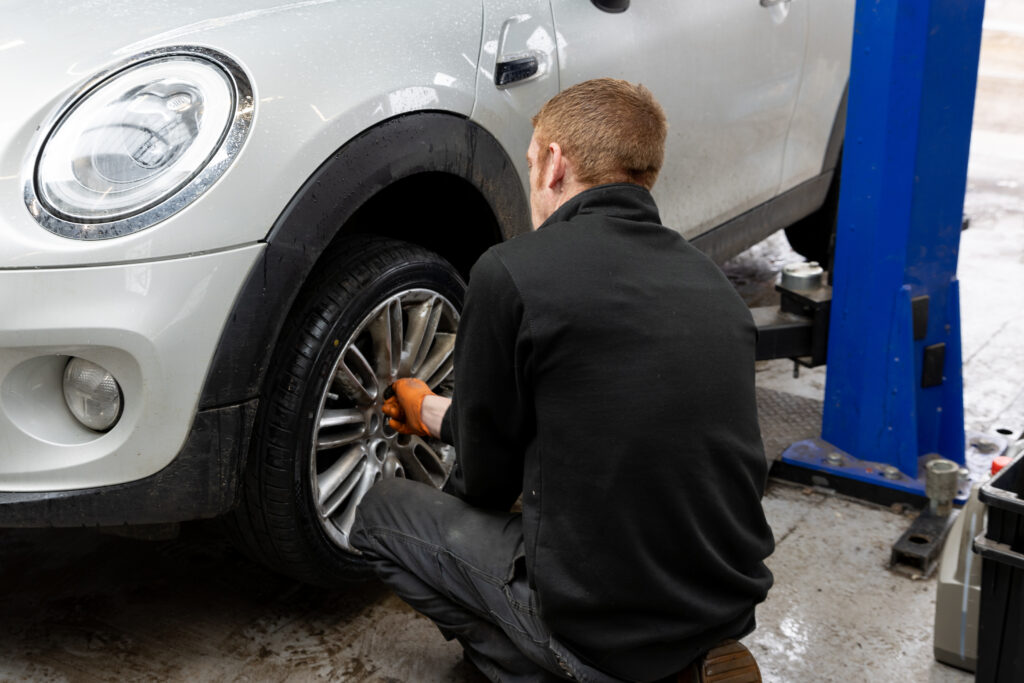
When temperatures drop, the air inside your tyres contracts, causing pressure to fall. Underinflated tyres reduce grip, increase braking distances and wear out faster. On wet, frosty or muddy Dorset roads, that loss of grip can make a real difference.
Cold weather can also make tyre rubber stiffer, reducing flexibility and traction, particularly if tread depth is already low.
Top tips:
Check tyre pressures regularly throughout winter, not just when warning lights appear. Make sure tread depth is well above the legal minimum and keep an eye out for uneven wear or sidewall damage, especially if you drive on rural roads.
Brakes work harder in winter
Winter driving often involves more stop-start traffic, slippery surfaces and longer braking distances. While modern braking systems are designed to cope with this, cold and damp conditions can accelerate wear, particularly on vehicles used for short journeys.
In some cases, brake components may also corrode slightly if the car isn’t driven regularly.
Top tips:
Listen for squealing, grinding or changes in braking feel. If your brakes feel less responsive or make unusual noises, it’s best to have them checked sooner rather than later.
Engines and fluids take longer to warm up
Cold engines don’t operate as efficiently as warm ones. Oil thickens in low temperatures, making it harder to circulate around the engine during start-up. This increases wear, particularly on short journeys where the engine never reaches full operating temperature.
Other fluids, such as coolant and screenwash, are also affected by cold weather.
Top tips:
Avoid revving the engine hard straight after starting. Let it warm gently as you drive. Make sure coolant levels are correct and always use proper winter-grade screenwash to prevent freezing.
Warning lights appear more often
Cold weather can expose existing weaknesses in sensors, batteries and electrical systems. It’s common for warning lights to appear during winter, even if the car seems to drive normally.
Ignoring warning lights can turn a small issue into a bigger problem, especially if the underlying cause is electrical or battery-related.
Top tips:
If a warning light comes on, get it checked. Diagnostics can often identify simple faults early, saving time and money in the long run.
Wipers, lights and visibility suffer
Short days, poor weather and dirty roads mean visibility is more important than ever. Wiper blades harden in the cold, washer jets can freeze, and bulbs are more likely to fail during winter.
These are also some of the most common MOT failure points.
Top tips:
Replace worn wipers, keep washer fluid topped up, and check all lights regularly. A quick walk-around check can prevent issues before they become unsafe.
Why winter checks matter
Many cold-weather problems are avoidable with simple checks and routine maintenance. A winter inspection can highlight weak batteries, worn tyres, brake issues or low fluid levels before they cause inconvenience or breakdowns.
At DCM Autocentres, we see first-hand how a small check in winter can prevent a big problem later on.
Keep your car reliable through the colder months
Cold weather is tough on cars, but it doesn’t have to lead to breakdowns or unexpected repairs. Paying attention to how your vehicle behaves in low temperatures and acting early makes all the difference.
If you’ve noticed changes in how your car starts, drives or sounds during cold weather, our teams in Shaftesbury and Blandford are here to help. From battery checks and tyres to brakes, diagnostics and MOT testing, we’ll help keep your car safe and reliable until warmer weather arrives.
Do you need help from our experts?
Give us a call today to get expert advice and support from our experienced team.
We are highly rated and reviewed


Honest company with the best management, very transparent about prices and their services are always outstanding. I am grateful to finally have a reliable mechanic that I can fully trust. Regardless of their busy schedule, the reception is always welcoming and helpful


Really recommend DCM in Shaftesbury


Richard
